Species details


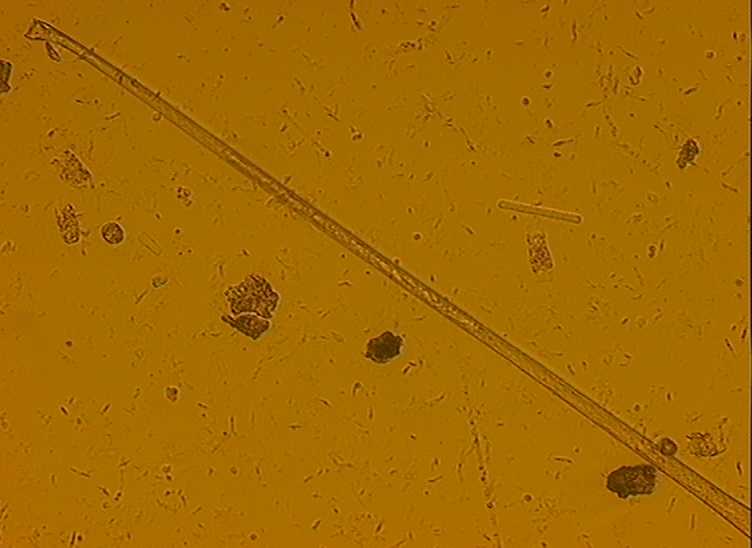
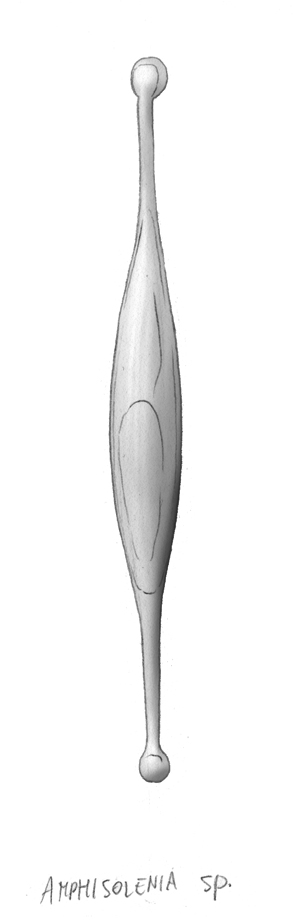
The cell is thecate, of large dimensions and elongated. The cell is composed of a very small "head” (epitheca), a long, narrow "neck”, and a "body" (hypotheca), which may be more most or less swollen. The distal part of the hypotheca continues into a "tail", which may be bifurcate or subdivided into a number of parts. In most species of the genus, the epitheca is at an angle to the longitudinal axis of the hypotheca. The cingulum, situated on the head, may be slightly tilted, while the sulcus runs from the cingulum and extends only partly over the hypotheca, terminating before the swollen part of the cell. The cell contains chloroplasts.
- Cell Length: up to 1000 µm
Marine, typical of tropical and subtropical waters. Some species have also been found in temperate waters.
In some cases symbiotic cyanobacteria have been identified near the cingulum.
Toxicity:Not reported.
Resistence Stages:Not reported.
Die naturgeschichte der arthrodelen flagellaten. In: Der Organismus der Infusionstiere. III., Leipzig Eds, Stein F., 1883, 1-30
_635192487376990000.jpg)
_635192487450750000.jpg)