Species details
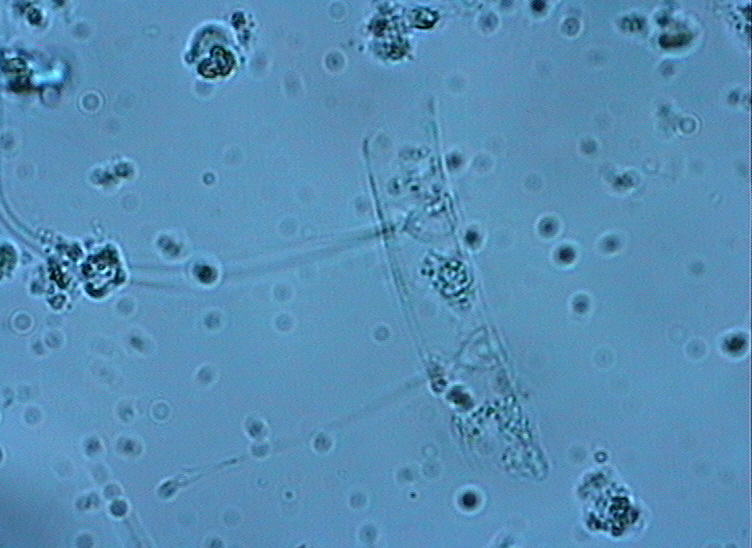
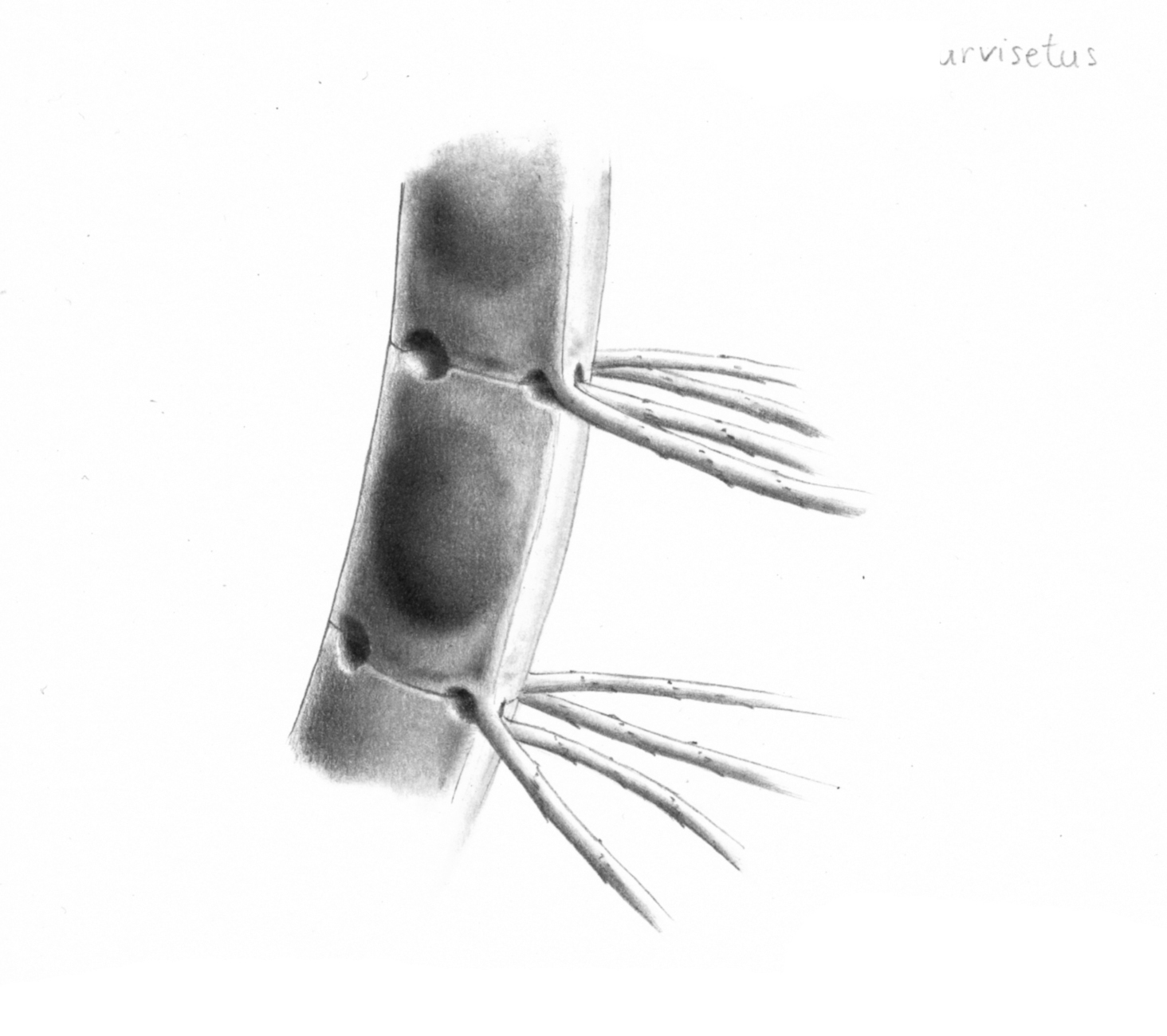
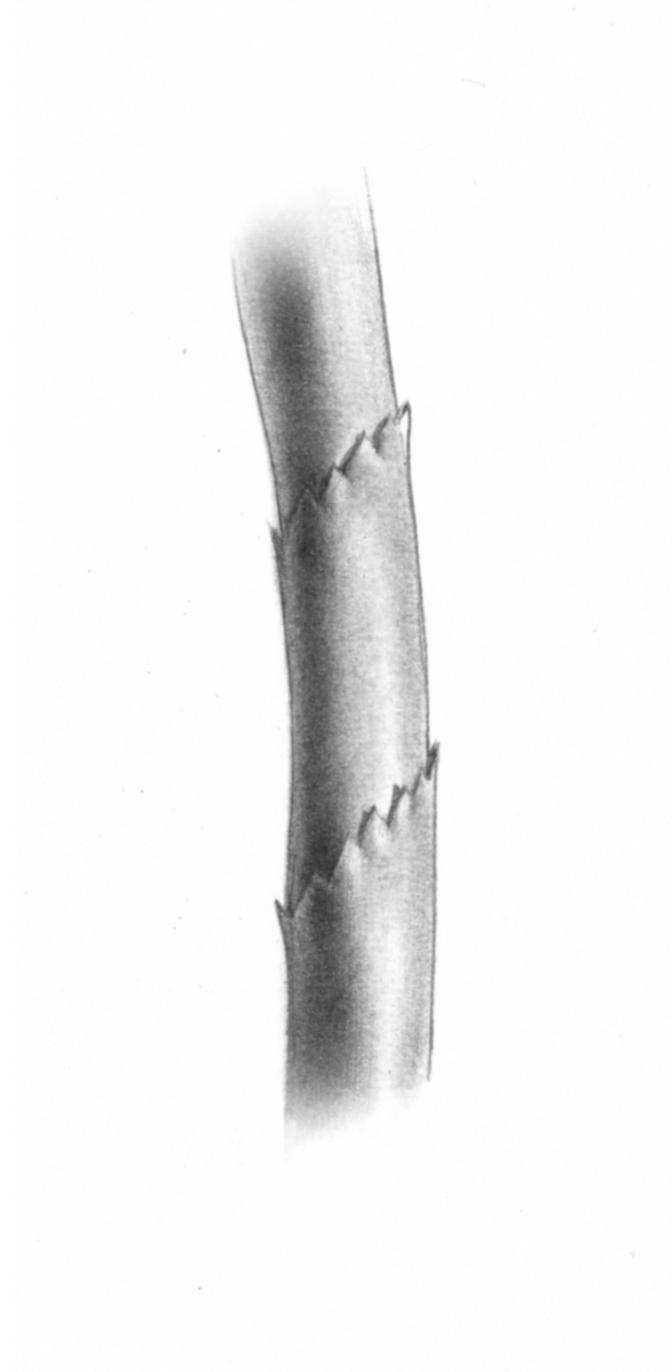
The cells form colonies composed of long, curved chains. the valve surface is elliptical. The valve, which has a low mantle, appears rectangular in girdle view. The terminal valves have an external rimoportula similar to a flattened tubule. The aperture between adjacent cells (foramen) is elliptical in shape. On each valve there are four projections that fuse with the corresponding projections of the adjacent cell, generating three holes along the valve margin that are visible in girdle view: a narrow central aperture (foramen) and two small round lateral apertures. The intercalary setae lie at an angle of 35-80° to the axis of the colony and the terminal setae at an angle of 55-60°. Both the intercalary and the terminal setae are long and thin, emerging from the apices of the valves. After a short basal section they bend towards the outside of the curve of the chain. In addition they are covered in small spines and numerous poroids arranged in a spiral pattern. In cross section they appear circular. There is one large chloroplast per cell.
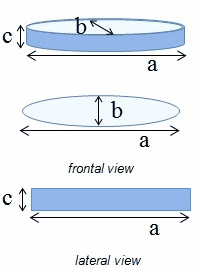
- Apical Axis: from 15 to 50 µm
- Pervalvar Axis: from 15 to 30 µm
- Aperture: from 4 to 6 µm
Neritic, tropical and subtropical.
Distribution: in Europe: Croatia (Vilicic et al. 2009); in Asia: Russia (Shevchenko et al. 2006).
Easily identified by the direction of the setae and by the shape of the apertures between adjacent cells (foramina).
Toxicity:Not reported.
Resistence Stages:Not reported.
Sur quelques Algues nouvelles ou peu connues du Phytoplancton de l'Atl antique., Bulletin de la Société Botanique de France 57:, Mangin L., 1910, 344-350
The genus Chaetoceros (Bacillariophyta) from Peter the Great Bay, Sea of Japan., Botanica Marina 49:, Shevchenko O.G., Orlova T.Y.,Hernandez-Becerril D.U., 2006, 236-258.
Composition and annual cycle of phytoplankton assemblages in the northeastern Adriatic Sea., Botanica Marina 52(4), Vilicic, Djakovac, Buric, Z. & Bosak, 2009, 291-305.
_635192538620010000.jpg)
_635192536546170000.jpg)